Thursday, 21 May 2015

Wits' End

A youth filled with everything
Every outcome
Every end.

fell dead;
like culture;
the death of which provoked him.


Yours,
SiBot

Tuesday, 27 January 2015

Moon Gazer

Franz Masereel
I can't sleep. Light a candle?
Only there are no matches.
The whole world is silent, and I am silent,
I gaze at the lunar light.

And think: how many eyes
In just this same silence,
At such a quiet, clear hour
Are trained on the moon.

How tedious it must be to swim
Above our heads,
To coat strange windows with silver
And to see so many eyes.

A century ahead, a century back,
But in the world all is the same-
Dogs bark, and dreamers
Gaze out the window.

G. Ivanov - 1931.

Wednesday, 3 December 2014

In hours like these...


Past one o’clock. You must have gone to bed.
The Milky Way streams silver through the night. 
I’m in no hurry; with lightning telegrams
I have no cause to wake or trouble you. 
And, as they say, the incident is closed.
Love’s boat has smashed against the daily grind. 
Now you and I are quits. Why bother then
To balance mutual sorrows, pains, and hurts. 
Behold what quiet settles on the world. 
Night wraps the sky in tribute from the stars.
In hours like these, one rises to address 
The ages, history, and all creation.

-Vladimir Mayakovsky

Yours, 
SiBot

Tuesday, 7 October 2014

Carousel

Scale continuous

rolls 
 the staff 
  cylindrical; 

never             flat.
          falling 


Painting ~ Konstantin Yuon, 1913.

Yours,
SiBot

Wednesday, 16 July 2014

Today's Nonsense

"—You think I'll weep;
Lynd Ward
No, I'll not weep: I have full cause of weeping,
But this heart shall break into a hundred
thousand flaws,
Or ere I'll weep; O Fool, I shall go mad."
"Gradually there settles down a dreadful, eternal silence of the cemetery. All go mad, without words, they realise what is happening within them, and make up their minds for the last shift: to hide their grief for ever from men, and to speak in commonplace, trivial words which will be accepted as sensible, serious, and even lofty expressions. No longer will anyone cry: "Life is a waste," and intrude his feelings on his neighbours. Everybody knows that it is shameful for one's life to be a waste, and that this shame should be hidden from every eye. The last law on earth is—loneliness..." 


Résigne-toi, mon coeur, dors ton sommeil de brute!

(Resign yourself, my heart, sleep your brutish sleep) 

-Lev Shestov: Apotheosis of Groundlessness


Regards,
SiBot

Tuesday, 20 May 2014

Phoneticism / Maya-krazy

Willow,
   though phonetically unsound...
Kruchenykh would be proud; 
such sonorousness!
whistled in wind. 

Such words, phrases.
Mean everything,
To no-one;

But you, Life.
plangent with me,
you are, indeed.                                                                                                
-Regards, SiBot


(instead of a letter)
              
Tobacco smoke has consumed the air.
The room
is a chapter in Kruchenykh's inferno.
Remember -
beyond that window
in a frenzy
I first stroked your hands.
You sit here today
with an iron-clad heart.
One more day
you'll toss me out,
perhaps, cursing.
In the dim front hall my arm,
broken by trembling won't fit right away in my sleeve.
I'll run out,
throw my body into the street.
I'll rave,
wild,
lashed by despair.
Don't let it happen
my dear,
my darling,
let us part now.
After all
my love
is a heavy weight
hanging on you
no matter where you go.
Let me bellow a final cry
of bitter, wounded grievance.
If you drive a bull to exhaustion
he will run away,
lay himself down in the cold waters.
Besides your love
I have
no ocean
and your love won't grant even a tearful plea for rest.
When a tired elephant wants peace
he lies down regally in the firebound sand.
Besides your love
I have
no sun,
but I don't even know where you are and with whom.
If you tortured a poet like this,
he
would berate his beloved for money and fame,
but for me
no sound is joyous
but the sound of your beloved name.
I won't throw myself downstairs
or drink poison
nor can I put a gun to my head.
No blade
holds me transfixed
but your glance.
Tomorrow you'll forget
that I have crowned you,
that I burned my flowering soul with love,
and the whirling carnival of trivial days
will ruffle the pages of my books...
Would the dry leaves of my words
force you to a stop
gasping for air?

At least let me
pave with a parting endearment
your retreating path.

Lilichka, Vladimir Mayakovsky, 
Petrograd, 1916

http://themattgonzalezreader.wordpress.com/2009/06/15/lets-bellyache/

Friday, 2 May 2014

Neo-Futurist


Futurist made his stand
earning the wrath of hipsters;
more modern than they.

turning back in time
outdid their modernity;
Forever avant-garde.

SiBot.


Monday, 24 March 2014

Dear Friends!


Dear Friends, 


I live without hope of ever communicating my gratitude to you, to any extent I might consider satisfactory.

But please do not think of me as a pessimist! Anguish might well interrupt me on most days I wake, including those meant to be celebrated, but without your support and kind wishes, I couldn't live in the hope of otherwise making myself understood... 

And so as lousy as things have been, it just so happens the date of my birth coincides with the beginning of Spring...


Last of the tempest-scattered clouds!
You alone charge upon the azure;
You alone cast a shadow, sad;
You alone temper the brightness of day.

Over time just passed, you covered the sky,
With lightning wound around you;
You thundered into the earth;
Pouring rain upon its perpetual thirst,

Enough! Disappear, that time has passed,
The earth is refreshed; the tempest flown away,
As gentle wind, caressing the leaves of trees,
Brings forth a heavenly repose. 

*Alexandr Pushkin, 1835
Isaac Levitan: Above Eternal Peace (1894)


 "De los seres que amamos su existencia nos basta."
 — 
Of the beings we love, their existence is enough for us.
— 
Yours,
SiBot


*I wasn't satisfied with the English versions already available, so I attempted to indirectly translate it myself. You may be surprised to know its a fairly common practice in the literary world for writers with very little knowledge of the original language to do this. The two versions I'd seen both tried to match the rhyming scheme (not strictly necessary considering the rhyming pairs in the original Russian alternated between genders) - obviously not possible to replicate in English. I also didn't pay too much attention to amphibrachic tetrameter, in favour of more closely replicating what the original actually said. E.g. the first of the below translations isn't sound English, and the second ignores the repetition of 'Одна ты'. 


http://www.poetryloverspage.com/yevgeny/pushkin/cloud.html

http://www.russianlegacy.com/en/go_to/culture/poetry/pushkin/storm_cloud.htm


Monday, 10 March 2014

On Waking at Noon Without a Voice...


Called out to the world,
                                      
and heard by no one,

Became a thinking thing.

Eyes began to see themselves;
Cognition could be scrutinized,
                                            turning,
in on itself.

Swallowed tongue
spoke to heart,
to cease its agitation!

And no protest was heard,
                                       nor seen,
let alone,
              misunderstood.


SiBot

Monday, 20 January 2014

Blue Monday


Dear Friends,

"You see, the trouble is that no devastating or redeeming fires have ever burnt in my life. It never was like a morning which gradually fills with light and colour and then turns, like other people's, into a blazing, hot day, when everything seethes and shimmers in the bright noonday sun, and then gradually grows paler and more subdued, fading naturally into the evening twilight. No! My life began by flickering out. It may sound strange but it is so. From the very first moment I became conscious of myself, I felt that I was already flickering out. I began to flicker out over the writing of official papers at the office; I went on flickering out when I read truths in books which I did not know how to apply in life, when I sat with friends listening to rumours, gossip, jeering, spiteful, cold, and empty chatter, and watching friendships kept up by meetings that were without aim or affection; I was flickering out and wasting my energies on those I imagined I loved; I was flickering out when I walked idly and dejectedly along Nevsky Avenue among people in raccoon coats and beaver collars - at parties on reception days, where I was welcomed with open arms as a fairly eligible young man; I was flickering out and wasting my life and mind on trifles moving from town to some country house, and from the country house to Gorokhovaya, fixing the arrival of spring by the fact that lobsters and oysters had appeared in the shops, of autumn and winter by the special visiting days, of summer by the fêtes, and in life in general by lazy and comfortable somnolence like the rest. ...Even ambition - what was it wasted on? To order clothes at a famous tailor's? To get an invitation to a famous house? To shake hands with Prince P.? And ambition is the salt of life! Where has it gone to? Either I have not understood this sort of life or it is utterly worthless; but I did not know of a better one. No one showed it to me. You appeared and disappeared like a bright and swiftly moving comet, and I forgot it all and went on flickering out. ...'
   You said just now that my face had lost its freshness and was flabby. Yes, I am an old shabby, worn-out coat, but not because of the climate or hard work, but because for years the light has been shut up within me and, unable to find an outlet, it merely consumed itself inside its prison house and was extinguished without breaking out into the open. And so years have passed. 
My dear friends: I do not want to wake up any more."

(Ilya Ilyich Oblomov).

Monday, 16 December 2013

Quartermain

In streets of rain,
tethered to life,
wades an old man
plastic bag in hand;
Clutching at one handle
as one might expect,
of a lazy youth.

But he has to grip tightly
beside himself with life;
Keeps carrying on,
Whilst dying to escape.

Friday, 25 October 2013

João Torto


Tried to touch the sky
Hurtled down into the earth
Found Heaven instead

Yours,
SiBot

Wednesday, 16 October 2013

The Ghost


This morning you woke and rose,
The Ghost stayed down in bed
Waited and stared til' you made home
Watched the weather, All the way.

The big bold world opened its arms
And embraced all you affected
Thus The ghost sank through the bed
He made it all cold, with Sleep.

So when you returned with visions,
The ghost reflected in the window
And saw darkness All Around;
Heard it in your words; aspiration,
And slid down through the ground.    
                                                                                      
Yours, 
                      SiBot.                       

Saturday, 12 October 2013

Mineshaft

You were right to steer well clear:
The status quo pervades this place;
The only way is down.

To Rakhmetov’s lair!
Where ideas are King,
Under a stalactite sky.

The bashing of hammers
becomes the flicking of knives
A scratch on the rock, surfaces on the skin,
As a razors line.

You were right to down your tools:
The status quo pervades this place
Where gold bleeds with an iron face.

A mountain pointing the wrong way,
Buried in the earth, and dormant in darkness;
A child in a well;
Where amidst the clouds a great thinker once sat,
Waiting for the night to take his place.

You climbed outside, freed your mind,
With ideas of heaven;
And a bright blue sky.

You were Right!


For he was glad of your leaving;
No longer teased with life,
Finally left at peace, to bleed himself dry.

Friday, 27 September 2013

Some Literary Tidbits

I couldn't help noticing similarities in patterns of thought, from the following literary segments my brain addled together: 
Perhaps they hold that the only wisdom is that of absurdity, and that accordingly, absurdity will grant you no wisdom at all, unless you deem the acceptance of every possibility a life lesson. 
I would like to suggest it is indeed just that, thus it is a shame it might take a lifetime to finally realise it; be it a life of many years, or one 'cut short'. But realisation will still occur at the end, when it is all too late to try to live one's life without all those useless principles.


“The future: A clever, reasonable boy, accustomed to trust his common sense, read in a book for children a description of a shipwreck which occurred just as the passengers were eating their sweets at dessert. He was astonished to learn that everyone, women and children as well, who could give no assistance whatever in saving the ship, left their dessert and rushed on deck with wailing and tears. Why wail, why rush about, why be stupidly agitated? The crew knew their business and would do all that could be done. If you are going to perish, perish you will, no matter how you scream. It seemed to the boy that if he had been on the ship he would just have gone on eating his sweets to the last moment. Justice should be done to this judicious and irreproachable opinion. There remained only a few minutes to live; would it not have been better to enjoy them? The logic is perfect, worthy of Aristotle. And it was found impossible to prove to the boy that he would have left his sweets, even his favourite sweets, under the same circumstances, and rushed and screamed with the rest. Hence a moral - do not decide about the future. Today common sense is uppermost, and sweets are your highest law. But tomorrow you will get rid of normality and sense, you will link on with nonsense and absurdity, and probably you will even get a taste for bitters.

What do you think?”

^Lev Shestov, All Things Are Possible Part II, Aphorism 38.


“That children do not know why they want things – on this all high and mightily learned schoolmasters and tutors agree; but that, like children, adults also stumble through the world and, like children do not know whence they come and whither they go, nor act to some true purpose any more than children do, and like them are ruled by cookies and cakes and birch rods – no one likes to think that, and yet to me it is palpable truth.
   I’m quite willing to admit – because I know what you’re likely to want to say to me here, that those people are happiest who, like children, live for the moment, wander about with their dolls, dressing and undressing them, and keep a sharp eye on the cupboard where Mama has locked up the pastries, and when they finally get what they want, stuff their mouths with them and cry: More! – Those are happy creatures. And those others, too, are happy who give grand names to their paltry passions and present them to the human race as gigantic accomplishments for its welfare and salvation. – Happy are they who can live this way! But those who in all humility realise the sum total, who see how neatly every contented citizen can shape his little garden into a paradise, and how tirelessly even the merest wretch, panting, makes his way beneath his burden, all of them equally determined to see the light of the sun one minute longer – yes, that man keeps still, and he creates his world out of himself, and he is happy as well because he is human. And then, confined as he is, he still always keeps in his heart the sweet sense of freedom, knowing that he can leave this prison whenever he chooses.”

^Johann Wolfgang Von Goethe, The Sufferings of Young Werther  Book One, May 22.

Yours,
SiBot

Wednesday, 14 August 2013

I Think God Can Explain


Raskolnikov and the Leap of Faith:


What can God explain to a man so impoverished, dishevelled, and nihilistic that he turns to murder?
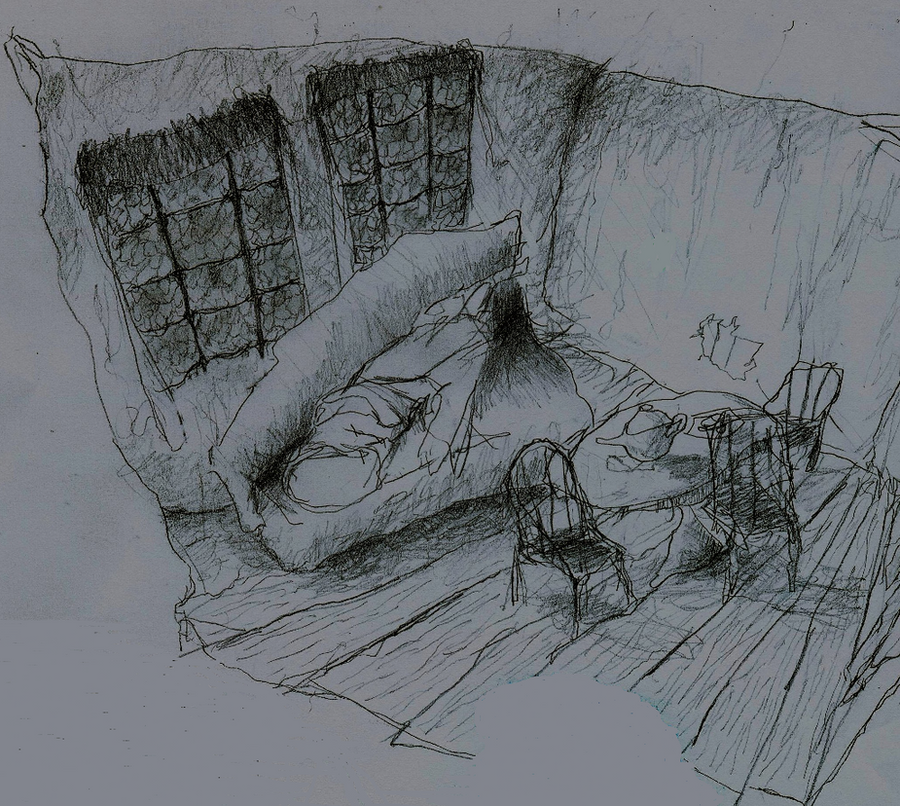
                                                                                                                                                                
Is a man deemed criminally insane not susceptible to severe emotional weakness to the extent that the only comforting explanation, and apparent forgiveness, is indeed that which comes from God?


Indeed if we look at the 'treatment' of suffering addicts in America for example, it very much seems to be a case of God first, material treatment later or not at all: Religion is frequently used by 'therapists' as a means of overcoming addictions arguably brought about by nihilisms, or vice versa; to the extent that religion dominates the addiction treatment 'marketplace'. God, or at least the notion of God transcends the emotional vulnerabilities of the sufferer. It becomes a marketable 'product'.

Does man at his weakest point turn to the most desperate of explanations for his state of crisis, precisely because his mind has wondered far from any rational bounds?

Does intense rationalism not precipitate nihilism, which thus precipitates desperate actions, which then precipitates a man turning to God for the answers to the desperate and entirely confused situation that he no longer has the temperament to rationalise?


In this regard, the character of Raskolnikov, the murderer, in Crime and Punishment first of all illuminates himself as to the reality of the absurd world; his reduction to impoverishment*, crawling into a ball on his tattered sofa, in his squalid low ceilinged claustrophobic Saint Petersburg apartment. (Note the theme of reduction: the room is small, the sofa even smaller, Raskolnikov even smaller than the sofa). A "louse" in the social order.


This realisation of absurdity means he turns to murder, without distinction of worldly consequence. In this sense his 'realisation' and 'enlightenment' lead him to an act which precipitates delirium. But does this not mean the act itself is the act of a deluded man, as I have pointed out, his realisation of absurdity would appear to be a process of enlightenment. Criminal proceedings would however, through the worldly trend of self-satisfactory/socially satisfactory ignorance (as they do indeed in the novel, i.e. 'monomania'), effectively dictate that:                                                       


1) Nihilistic Beliefs/Enlightenment = delusion (and surely criminal insanity?                    
2) Absurdism (i.e. an absurd act, i.e. a random murder) = Delusion (as above).
3) The overall marketable 'product' of justice = An act committed by a criminally insane person.                                                 

But then enlightenment is reversed: After his 'barbarous act' our assailant turns to God to answer his painful woes and sorrows: This pain and discomfort with the world are pre-existant of the murder (this is important to recognise)... but they do also ultimately pre-empt the murder. If the man had somehow turned to God as a response to his initial skepticism of the world this might be deemed an equally delusional response, indeed, to him, an axiomatic, rationally deductible, delusional response. Rational deduction led the man to nihilistic torture. Thus the 'product' of God; of repose for our assailant, is borne out of all that is criminal, deluded, and criminally deluded in him.

And so with the input of Sonia, effectively providing the role of 'therapist', turning to God becomes the 'logical' response to the end of the chain of delusion. God is the comforting protection from nihilistic pain and torment, arising not from the pre-existing emotional struggle, but from the psychological consequence of the act (i.e. the murder), the PASSIONATE expression of total FREEDOM; the REVOLT against this consumptive torment. 

But what about those people who turn neither to Nihilism or to God, where are they on the road?

Life,
it continues as does a bicycle,
Being pedalled by someone.

All the the way along,
the wheels slip and slide underneath;
the handlebars always threaten to crash sideways into the pavement;

The panic each time they tilt,
resets and recycles,
all the way along the road.

Until,
one day you fall;
and the bicycle skids away.

...They keep on peddling, longer than anyone else, surrendering to nothing; they are not impoverished Raskolnikov's, who get off the bike, and cover themselves in rags by the roadside, and they have not reduced themselves to anything other than their mysterious directional conviction, whilst the Raskolnikov's of this world, at once a religious and nihilistic zealot, cannot comprehend this sense of direction, neither can the cyclists foresee their directionlessness; we are presented with an interpersonal security dilemma:

"In response to this, Raskolnikov slowly sank back on his pillow, threw his arms behind his head and began to look at the ceiling."

Yours,
SiBot

Friday, 2 August 2013

Tolerance

A Starving heart gave itself unto the world,
Found nothing in return, but alcohol.
Washed away the clinking bone and bread crust;
Its rhythm slowed to a pitiful pulse.

And so it happened without cause, without meaning,
A man started to lumber under his dysfunction,
Enlightened by the natural environment,
Bent on all fours and began to crawl.

Crawled from the sight of maltreated mothers,
With an axe attached to a piece of string;
Disguised underneath a strangers coat.
Impatient to the end, just like you.

Unable to digest the world;
Just like no one who has ever lived;
A stomach starved of life,
Eaten up by the possibility of everything.


Yours
SiBot

Sunday, 21 July 2013

A Madman

A Genius who laughs,
At the most hilarious and wittiest of complexities;
In the company of strangers,
Is, after all,
A Madman.

Yours,
SiBot

Monday, 8 July 2013

A Haiku

A Haiku to describe a rather minor happening in Reading station today:

Man cried out for change
needed to use the payphone
his call went unheard

Yours,
SiBot